
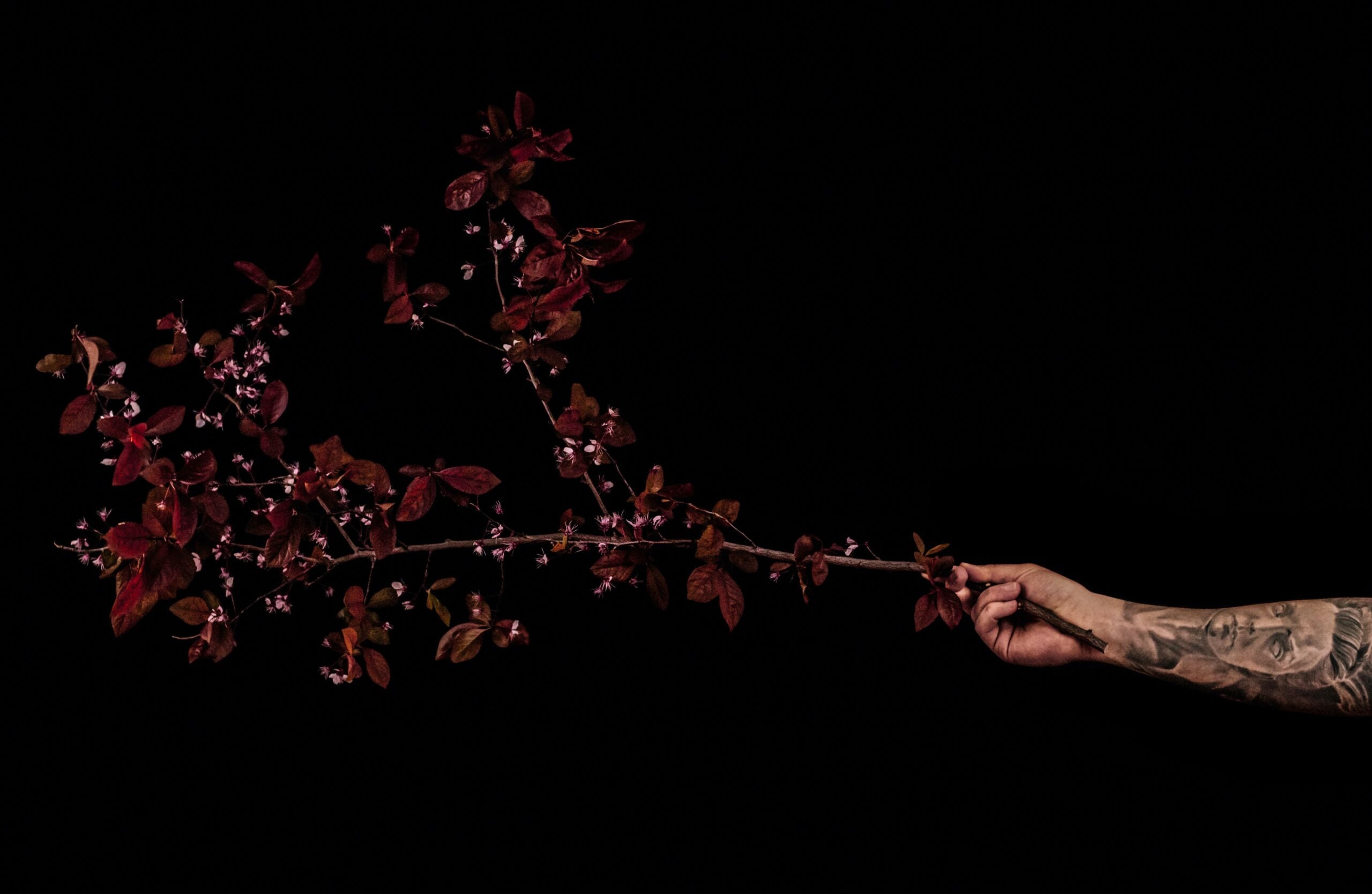
In traditional Japanese painting, flowers hold very significant meanings. Japan boasts many beautiful flowers and plants such as cherry blossoms, lotus, chrysanthemums, plums, camellias, peonies, and wisteria. Around the 18th century, books featuring flowers and plants became popular and began to be frequently used in fabric and furniture decoration. Floral patterns adorn various items, from kimonos to folding screens, and will remain a timeless design in both modern and future contexts. Even in tattooing, with the emergence of diverse designs every year, wouldn't floral patterns be one that endures?
This time, I will introduce Japanese flower tattoos. I hope this serves as a reference for designs and helps spark your own creative ideas.


Initially, flowers were incorporated into various designs due to their beauty, and from this, "ikebana" (flower arrangement) was born as a derived art form.

After that, flowers came to be used as symbols related to philosophy, religion, and the general worldview.


Just as each flower has a "flower language" with different meanings, traditional Japanese flowers also have "kodama," which are believed to be spirits residing in trees, and are treated as sacred. Perhaps the modern symbol is the "cherry blossom."


What's wonderful about these flower designs is that they can be used as backgrounds, ornaments, or illustrations, or the flowers themselves can be the main subject. Whichever way they are used, they will result in a "brilliant" piece of work.

If you're having trouble with your design, please consider these!
Reference
This article is a translation and reorganization of this page.