
Tattoos and piercings are decorations and cultural practices that have existed since ancient times, evolving and being passed down through generations. While the foundation remains the same, each era has added its essence through new ideas and creativity. Today, in some regions, it's said that about half of students have piercings. Similarly, there are slight signs that tattoos are becoming a trend among young people (prejudice notwithstanding).
The concept of tattooing dates back thousands of years. The first known example is the mummy called Ötzi the Iceman, who is said to have had tattoos related to acupuncture points for arthritis and other ailments. In some tribes, tattoos were used as a form of prayer, while in others, they were a way to express strong will.
However, then as now, some people give up on getting tattoos due to fear of pain and infection. The unbearable pain some feel from a wrist tattoo might be just a prickling sensation for others, and the sensation also changes depending on fat and muscle mass, and whether the person is male or female.
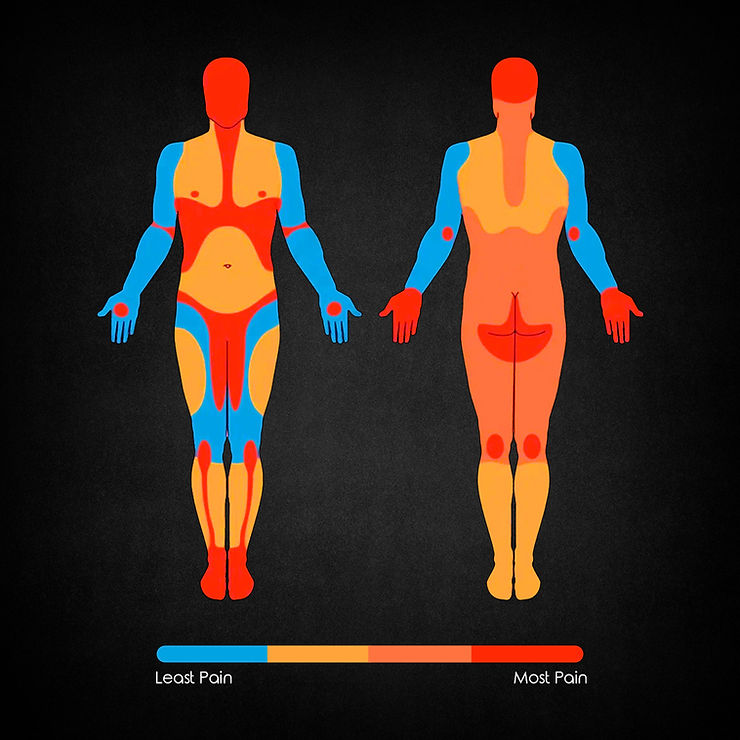
Pain Chart

Head
The head is said to be one of the "most painful places to get a tattoo" because multiple nerves run through it, making it prone to pain. The continuous sensation of a needle piercing the skull would also be stimulating and painful for many. Given the intense pain associated with the head and general public perception, it's not a popular choice for most people. Therefore, head tattoos are not recommended for anyone other than those with extensive tattooing experience and little remaining space on the rest of their body.

Neck
The front of the neck is more painful for tattooing compared to the sides or back. This is due to the many nerves in this area and the thin layer of skin separating the tattoo needle from the cartilage. It's also said to take longer to heal due to the significant friction from clothing and during sleep. Without proper care to keep this area clean, it can become infected, increasing the amount of pain felt.

Arms
The arms are generally a safe bet for tattoos. The areas of the arm that cause less discomfort are the shoulders, biceps, and forearms. These areas tend to have more muscle and fat, and fewer concentrated nerve systems. Therefore, as you might imagine, they are ideal for a first tattoo, and many people start with their arms. Conversely, the areas that tend to be painful are the armpits, elbows, and hands. The armpit is one of the most sensitive parts of the body, making it the most painful place to get a tattoo. Sweat glands and nearby lymph nodes are likely to be quite irritated during the procedure. The elbows, fingers, and hands have thin skin, leading to high friction and potentially intense pain. Healing after the procedure will also likely take longer than in other areas.
Torso
The amount of pain experienced in this area varies from person to person and also depends on whether the individual is biologically male or female. Women generally have more concentrated fat in the chest area than men, which can alleviate pain during the procedure. The stomach also has relatively less fat regardless of gender, so it might be a bit more painful compared to other parts of the torso.

For both men and women, the collarbone, rib cage, and sternum areas are among the most painful places to get a tattoo due to thin skin and constant contact with clothing. Therefore, it is preferable to get tattoos in these areas if you plan to spend the next week at home or can wear minimal, light clothing.
Back
Similar to the torso, there are painful and less painful areas on the back. The upper and lower back will likely cause relatively less discomfort compared to the spine. Conversely, the spine has a dense concentration of nerve endings, making it a very painful area.

Legs
The buttocks and upper legs can be some of the most painful areas to get a tattoo. Although there's a lot of fat and you might not feel much pain during the procedure, friction from underwear in this area can cause intense pain. If you want a tattoo on your foot, it's recommended to carefully adjust your personal schedule before getting it.

As mentioned earlier, pain is subjective, so the scale of pain varies widely. The amount of pain felt also changes depending on gender, previous tattoo experience, age, and weight. For those considering a tattoo, please use the information above as a guide and give it a try!
Reference
This page is a translation of this.